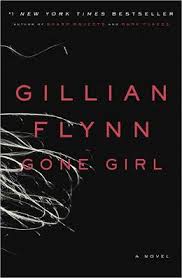
For those of you who haven’t read Gone Girl and or seen Side Effects, I’ve titled this post noting the Sad, Twisty women in both. If you’re still planning on checking them out, stop reading: spoilers abound. If you know the stories, or don’t plan to read them, I will now unveil the real title, which is
If You Disappoint a Woman, She’ll Hatch a Psycho Murder Plot That Frames You as the Perpetrator! Watch out!
Briefly: In Gone Girl, Nick comes home one day to find his wife, Amy, abducted. We pretty much know that he hasn’t done it (unless he’s lying to us, and we’re pretty sure he isn’t.) As the police find more and more evidence that points to him, he embarks on his own investigation and realizes that since high school, Amy has staged crimes against herself and framed her friends and lovers. The reason for insanity, we find out, is that her parents plagarized her life for their book series and then needed to take back her trust fund when they made bad investments. Nick also isn’t the husband Amy wanted him to be, either, losing his job in the recession, relocating her (without much choice) to his ailing hometown to care for his mean, dying father, and cheating on her with a student. The author, Gillian Flynn, manages to make both Amy and Nick sympathetic, despite their many flaws–Nick for being duped and following the trail; Amy for her lame parents and her scheming brilliance. However, when I saw the movie Side Effects last night, I started to see Amy’s actions in a darker shade.

The woman bottom-right is not who she seems. She’s sad AND twisty!
In Side Effects, another women with a simple name, Emily Taylor, has her money taken away, this time when her husband is busted for insider trading at a Gatsby lawn party. In the past, her ambitions centered around graphic design. However, she sets her sights higher when she gets treated for depression by a shrink with lesbian tendencies and embarks on a plot to make back the money, kill her husband, and get away with it. (Beware the shrink with lesbian tendencies, though fear not, she will always be unmasked as the bad seed.)

Not what they seem, either.
Enter Jude Law as Dr. Banks, this movie’s Nick, as the psychiatrist who sees Emily next as part of the murder plan. Emily gets him to prescribe her anti-depressants that induce somnolent activities, like knifing your husband in the back as you’re cooking him dinner. Dr. Banks testifies that Emily did this entirely unconsciously and helps Emily get institutionalized instead of imprisoned, but his job and marriage are upended with the taint of his bad prescriptions. Desperate to gain back his reputation, he, too, goes on his own investigation, in this case to learn that Ms. Emily Taylor is not actually the sleepwalker she claims to be.
So–what is that? Some women–both white–are so unable to accept disappointment that they go crazy, concocting elaborate deceptions that free themselves and destroy others’ lives? Okay, yes: insider trading, spousal cheating, and the sudden loss of money would throw me for a loop, too, and yes, this is genre fiction and entertainment. Still, I find it alarming that two authors in one year thought the public would find it satisfying to learn that cruel crimes and psychotic behavior were motivated by a woman’s disappointment in losing her station.
I can’t imagine this story ever being made with reverse gender roles, either because the disappointed man would go out and make something of himself or because we’d just think it was too mean for a man to frame his wife. It wouldn’t be entertaining. In contrast, we think it’s great for these bad men to be punished for their crimes against the seemingly defenseless women they wronged. “Go get ‘im, Lorena!” we cheer, until we learn–oh, noes!–that our Emily is psycho.
Except–wait! Lorena doesn’t come out on top. By the end of the story, Dr. Banks, however flawed and responsible for Emily’s circumstances, has the brains and tenacity to pursue his beliefs and seek out the she-devil and her truth. Side Effects ends with Emily, formerly only aping depression, now drugged to her pretty eyeteeth and staring out one of many indistinguishable windows of the mental institution. I felt a sense of justice, but what about Dr. Banks, who the movie makes clear was a little freehanded with the medication? Why does he get to drive off with his hot wife and cute stepkid at the end? No punishment for the man with the prescription pad?
I must give Gone Girl credit for a more savvy ending, or at least an attempt at one (of the two stories, it is by far the more finely crafted.) Amy gets pregnant with Nick’s kid, and even after all this crazy behavior, the two of them choose to stay with each other. It’s a perverse and, to me, witty take on the fact that people with families choose to be pinned down when we pick one partner and hope for the best. To that extent, Gone Girl does take responsibility for its story by having its female protagonist get what she so desperately sought to escape: life with an imperfect man. Or is it that she gets what she wants–a husband who chooses her, warts and all, while he has to live with someone whose flaws might only kindly be referred to as imperfections?
I just don’t feel that, as a woman, I’m being given much credit for my ability to accept reality. Yes, there is something exciting about women constructing new lives after they get handed a poop sandwich, but can the lives please not involve lies and murder? Just wondering.
For another feminist take on “Side Effects,” look here: