






BooksNewsBioAppearances and School VisitsFAQsDiscussion GuidesAdvice to Writers
blog
StuffContact
Jessica Leader RSS
  • My book!

    My book!
  • Recent Entries

    • Notes from Readers
    • What My Daughter Thinks I’m Writing
    • Research with the Homicide Detective
    • Link to interview with DC author Sandy Green
    • Sad, Twisty Women in Gone Girl and Side Effects
  • Tag Cloud

    advice Ah ARC Winners revealed! Author interview Blobs Book Blogger Love Book Briefs Book talk Clothing cute nephew pic Day 1 e. kristin anderson Early Morning Playwriting Final day Nice and Mean giveaway friends friendship Good Old Reliable Nathan Honeymoon guest bloggers Jen Nadol Library-Lovin' Blog Challenge Library Appreciation Day Louisville Free Public Library malt balls mean girls New Moon Nice and Mean Nice and Mean Giveaway Nice people Not That Girl On my Desktop Parent-child relations Poll results Research Reviews School Library Journal Battle of the Books Spring Tenner book trailer Summer Tenners! The Book of the Dead The Internet The Iron King When You Reach Me Win an advance copy of Nice and Mean! Writing Youth
  • Categories

    • Appearances
    • Book Reviews
    • Book talk
    • Bookstore visits
    • Building a Mystery
    • Cybils
    • Friday Buzz
    • Give-aways!
    • Libraries
    • Nice and Mean
    • Not That Girl
    • On my Desktop
    • On the Scene with Nice and Mean
    • Poll results
    • Promotion of Self and Others
    • School Library Journal Battle of the Books
    • School Visits
    • Teaching Tales
    • The Book of the Dead
    • Uncategorized
    • Vermont College of Fine Arts
    • Who is Jessica Leader?
    • Writerliness
    • Youth
  • Archives

    • April 2013
    • March 2013
    • February 2013
    • January 2013
    • November 2012
    • August 2012
    • July 2012
    • April 2012
    • November 2011
    • April 2011
    • March 2011
    • February 2011
    • January 2011
    • December 2010
    • November 2010
    • October 2010
    • September 2010
    • August 2010
    • July 2010
    • June 2010
    • May 2010
    • April 2010
    • March 2010
    • February 2010
    • January 2010
    • December 2009
    • November 2009
    • October 2009
  • Vote in a poll!

  • Latest Tweets

    • @lizb @Gwenda Does it have a good or bad impact this way? Thot purpose of the list was to avoid HP domination (HPotter, not HewPackard.) Time ago 14 Days via HootSuite
    • @gwenda @LizB Oh! I wonder why? Bc the sales are more about traction than individual achvmt? Still suspect that list compilers don't (1/2) Time ago 14 Days via HootSuite
    • @LizB I wonder all the time why series books are on the NYT YA or MG list but not in 'series.' #s on the spine vs no? Do they not know? Time ago 14 Days via Twitter
    • Powered by: Web Design Company

Follow @jessicaleader on twitter.

  • Follow Me


  • Blogs I Like

    • A Fuse #8 Production
    • Educating Alice
    • Jacket Knack
    • Reading in Color
    • Shelf Talker
  • Sites I Like

    • Market my Words
    • My Brother-in-Law's Freakin' Hilarious Picture Book Reviews
    • Shaken and Stirred
    • Through the Tollbooth
  • Archive for the ‘Writerliness’ Category

    What My Daughter Thinks I’m Writing

    Posted in Writerliness on 04/10/2013 12:57 pm by jess

    Jumping on the bed was apparently so last-millenium. Now monkeys are doing something else entirely.

    As some of you know, I have a daughter who will soon be two. We call her Mrs. McNoodle. She knows that her Mama (my partner) works at an office, and will even point out the office when we walk by it. Lately, we’ve been trying to round out the picture by telling her that Mommy (that’s me) writes stories.

    One morning when I was asleep (ahh), my partner asked her, “What do you think Mommy is writing a book about?”

    “Monkeys,” said Mrs. McNoodle. “Wiggle.”

    So. There you have it. According to Mrs. McNoodle, I am writing about monkeys who wiggle. At the time we asked, I didn’t even know she knew the word ‘wiggle’! (Note: I do not write picture books. I pretty much always write about people. So far, not one has memorably wiggled.)

    But this is no passing fancy. It’s stuck with her. Sometimes, I ask her what the monkeys should do in my book today. Recently, she said, “Haircut.”

    “The monkeys should get a haircut?” I clarified.

    “Yes.”

    “Do you want to tell me anything else about the monkeys?”

    She thought about it.  ”Tall.”

    “So I’m writing about tall monkeys who wiggle?”

    “Yes.”

    In my one of my favorite episodes of Story Corps, Scott Simon interviews his 6-year-old daughter about the process of adopting her from China. He tells her,

    SIMON: We wanted to get over there immediately. So we waited and waited and waited and we finally got to China….First we went to Beijing, and we–

    DAUGHTER: First Chicago, then Beijing.

    SIMON: Chicago, then Beijing, you’re right…(to the listener): She’s like an editor.

    Me and Scott Simon, we’re getting that editorial advice right and left. If I radically change genres, you know who to thank.

    •  
    • Add Comment » 5 Comments
     

    Research with the Homicide Detective

    Posted in Building a Mystery, Writerliness on 03/14/2013 10:30 am by jess

    I have to admit that once upon a time (a long, long time ago), I shuddered when people talked about doing research for their novels. I don’t think I dismissed it, exactly, but it was sort of like Organic Chemistry: awesome for some, but not for me. (Actually, that’s a bad example; Orgo is famously the endpoint for many aspiring pre-meds.) So Calculus, maybe, although no, I enjoyed Calculus, even if we found the volume of way too many swimming pools.

    I digress.

    I’m also not sure how I feel about having put a cat photo on my blog.

    The point is, I edged away from research. But since I started setting novels in places I don’t know well, now, I think: research! It’s great! Especially when you can interview someone. Yes, I could have found out about police procedure from the books and the internets, but when I talked to a retired homicide detective last week, I got so much more than just the facts, ma’am.

    I asked, Would it look disorganized if the police questioned my main character once, then asked her back? Does it make them look disorganized? He laughed.

    Would you take this detective for a major brain? Me, neither, but he always got his man. Or woman.

    “Did you ever watch Columbo?” he asked. “Peter Falk played the part of the dumb old cop who kept asking, ‘Excuse me, just one more question.’ People would get so frustrated with him, but he was the wise old owl. He recognized that you could play dumb and be wiser than got credit for.

    “Being an investigator, you have to play a game with people. The study of individuals and gathering info is something I’ve always loved about the job. I loved to play the mind games. You’ll identify who the person is but play the mind-game until you’re ready to take them down. When I ask you a question, I’ve done my homework, so I already know the answer or I wouldn’t be asking. If they answer truthfully, great. If they start trying to deceive you, you know they are and ask them why. It’s like talking to your kids. You know what they’ve done, but you ask them to tell you.”

    How great is his language? And how much better will my interrogation scene be now that I’m not just making up questions but having the detective already know the answer? My protagonist might not have done a thing to commit the crime, but if the detective asks her a question, knowing the answer, and she somehow stumbles and gets it wrong–nerves! Suspicion! Drama! In fact, I could use this technique with anyone in any story–principal, parent–even friend.

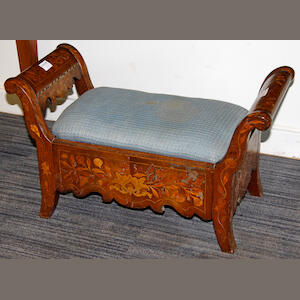
    Thank you, Lieutenant T, for your words and your attitude. You just opened a whole bunch of doors. As for me, I’m going to research 19th-century Dutch furniture so I can figure out what the partner-in-crime is dirtying with his Vans.

    There wasn’t even a Google auto-complete for 19th-century Dutch furniture, but I must admit that the furniture itself is not that singular. Still, glad I checked!

    •  
    • Add Comment » 3 Comments
     

    Link to interview with DC author Sandy Green

    Posted in Who is Jessica Leader?, Writerliness on 02/20/2013 11:14 am by jess

    Sandy Green, a local author whose funny blog features a purple car-spotting meme and the tagline, “Everyone’s sandy at the beach,” interviewed me on her blog! Check it out:

    Writing is Always Better with Cake.

    No idea how she came up with that title. Will have to ponder.

    Have I told you yet about Cake-Out, which makes amazing layered cakes in take-out containers, somehow managing to maintain amazing freshness even with layers of frosting and ganache? Probably not, because I am only marginally interested in cake.

    •  
    • Add Comment » No Comments
     

    Do You Hear the People Sing?

    Posted in Uncategorized, Who is Jessica Leader?, Writerliness on 01/16/2013 09:54 pm by jess

    Brothers and sisters, guess where I was Monday night?

    A showtunes sing-a-long. And if you’re going to read on in the hopes of an ironic sneer at the process, forget it! I love showtunes, and I love singing with people. It’s the closest thing in my life right now to organized religion: everybody engaged, with common knowledge and enthusiasm. Okay, we’re not seeking moral guidance, and for sure the carolers aren’t wrestling with the problematics of the song “Mame” (“The whole plantation’s hummin?” And really, people still do this show?). Still, I love singing with people, especially songs from musicals, which I’ve listened to all my life.

    I did walk into Signature Theatre, who was hosting this month, with trepidation. I’d

    I am no Fraulein Sally Bowles. Alas.

    thought it was going to be songbook-style, but when I came in late (since I can never manage to reach any DC destination without getting lost), only one person was singing, in a very jazzy cabaret. Uh-oh. Would this be amateur piano karaoke? I like to sing, but I”m nothing to make people listen to, and I definitely wasn’t going to belt out “Maria” for a crowd of strangers. I started to wonder if I’d driven extra on Glebe Road for nothing.

    However, when I reached the friend who worked there, she assured me that the event was, in fact, sing-a-long style; the lounge lizard was just doing a little publicity for an upcoming Signature show. Phew. I happily abandoned myself to the 50-page songbook and crooning crowd. Singing! Belting! With others and a piano! The piano player was totally into it, adding little flourishes that you hear on the soundtrack but have to add in on your own when you a capella in your car. I’m in my 30s and was definitely below the median age, but I was touched by the cluster of men in their 60s, letting others use the songbooks and signaling to the piano player to pause as they looked up the words to “Impossible Dream” and “Tomorrow” on their iPads. They were straight-seeming, too, which surprised and charmed me. People had come out of their demographic for the night, and I gave my gamest alto along with them.

    Not without moments of self-consciousness, of course. We ventured into the late 20th century with “525,600 minutes” from “Rent,” and one young redhead in too short of a shirt-dress got WAY more into it than I thought was seemly, doing little kicky dances and flirting cutely with her friend across the circle. Or–even worse–the crowd requested “Do You Hear the People Sing?” from Les Miserables and then proceeded to belt it out from memory, since it wasn’t in the songbook.

    There was an unwritten rule to loving musical theatre, I decided. It was perfectly fine to know the words to “I’m Just a Girl Who Cain’t Say No,” or “You’ll Never Walk Alone.” Those songs were just in the vernacular. Your parents sang from those shows, or you were in a production of one of them at camp. But to know the words to any song other than the major ballads of “Les Miserables” was just shameful. People shouldn’t admit to that sort of malarkey. Or maybe I didn’t want to be there when they did.

    Just as I was feeling the need for a bathroom escape, though, two new, young women sauntered through in impressively tailored coats. The one with glossy curls caught my eye and intoned, “The blood of the martyrs will water the meadows of France!” I couldn’t help but laugh. There was a little irony in the night after all. Or at least, just enough.

    Now, pardon me while I play a game of Spider solitaire so I can pay attention to the words to “Impossible Dream.” That’s a good song, yo!

    •  
    • Add Comment » No Comments
     

    Cementing the Gaps

    Posted in Writerliness on 01/08/2013 12:19 pm by jess

    I’m going to admit it. I struggle with writing the setting.

    See? No period after ‘Dr’

    I think I’m good with details of everyday life, especially food. Food just comes to me, whether it’s Diet Dr Pepper (with no period after ‘Dr’–copy-editor found this one!) or cookie dough. What I’m not as good at, at the get-go, are the surrounding details. Yes, I know how to tell you what the school hallway

    I kind of do like pictures of field hockey players, even though I never played.

    looks like, or even the main character’s bedroom, but when I do that in a first draft, the information I include often feels random. I could tell you that the main character has posters of field hockey players, but don’t you already know that? Is there something else I could be telling you?

    In fact, as I realized when I did a polish of a recent MS, yes. There are some details that are better than others to share–I just don’t always know it when I’m first-drafting. Take this one hallway scene. Initially, I talked about how it was crowded with kids, crushed together and chatting, blah blah blah. When I reread it, I grimaced at the filler-y nature of it all.

    Then I realized, Wait, I had wanted an opportunity to introduce this character Travis, who’s not a main guy but plays an important role in the 4th act (call him Shakespeare’s Messenger.) I wanted to establish that he was into science, so bingo! The hall is full of Travis staggering through the door  under the weight of his science project. And oh, now that I think of it, I need to show how it’s getting colder–now some of us are wearing coats! Early on in the drafting, I might not have realized when it was important to show the onset of cold, but later on in the process, I could swap out the filler details and put in evocative ones.

    Now that I’ve moved on to a new project, I’m not going to sweat the background details–setting, I guess–so much in the first draft. Sure, there are bits of information I want to share, and I’ll try to sprinkle them deftly, although I’m sure some will end up getting hacked out entirely! But if I get to a scene and I don’t know how to paint the background, I’m not going to drive myself crazy making something up. Instead, I’ll let myself slip in filler, or maybe even write “Blah blah blah,” until the time comes when I know exactly what I want to announce  or evoke.

    Not the food, though. That stuff bubbles up in draft one. Like the British tea I mentioned on Twitter a few weeks ago. I’m hoping that kid stays in the picture.

    This isn’t even as delicious as the one I wrote about.

    ps I hope you’ll vote in the poll to the left! What’s the focus of your writing resolutions?

    •  
    • Add Comment » No Comments
     

    The Dilemma of Character Questionnaires, Part the Second

    Posted in Uncategorized, Writerliness on 08/19/2012 03:39 pm by jess

    Last time I wrote, I implicitly compared the act of filling out character questionnaires to finding barf in your refrigerator. By ‘character questionnaire,’ I mean questions writers ask themselves about the characters they plan to put into a novel. Most writers have a vague idea of the character’s age, appearance, occupation, and personality, but of course it’s useful to think ahead of time about the character’s background and the things that motivate her. The more you know about those, the more you know how she will respond to external forces. Response=action, and that’s plot, baby!

    That said, so many writers I know cringe as they face, or even consider facing, a character questionnaire, and I’ve been one of them. So many of the questions are overly generic or, worse,  silly but without ammunition–no power. Until I found one that included questions like this:

    •  How does the character handle stress and problems?

    Such a good one. I have a character whom I pictured as an uber-confident, uber-cabaple, uber-connected uber-goober, but when I got to this question, I realized that in a crisis, the character blamed others as much as he possibly could.  Will that create action? You betcha!

    So will this question:

    What does this character notice when he walks into a room?

    Does anyone get the pun here?

    From the get-go, I might think that’s a refrigerator question (my new term for useless questions like, ‘What does your character keep in her refrigerator?) On second glance, though, the answer to this question will generate action as well. Does this character notice things first, or people? A character who obsessively

    Doesn’t this scene end with a collapse of these bones?

    notices if something’s out of place will try to fix it and maybe other people will react to that, creating action once again. A character who desperately hopes no one in the room will embarrass her will become tense if the room contains someone threatening, and maybe do something embarrassing just because.  Maybe she’ll even do something suspicious, which, in a mystery, would further fuel the plot.

    A final series of questions I really liked:

    • Best trait?
    • Worst trait?
    • What is this character’s opinion of self?
    • What kind of person do others think s/he is?

    Answer these back-to-back and you’ve got multiple dimensions.


    Is that Lou Reed?


    This does not provide an exhaustive list of the questions I found helpful, and if you find these loathsome, no worries–don’t answer them. I was just pleasantly surprised to find some useful questions that went beyond, “What do you want? What do you fear?” and I thought I’d share.

    Final note: strange to say, although I thought these all came from a list I was going to share with you, apparently I’d cobbled them together with other lists,

    I find this image a little chilling. Much less bad than playing H and S with Google.

    and cut and pasted. Maybe Google is hiding what it once gave me so readily; maybe I forgot my search terms. In any case, here‘s the closest thing I can find to the list of questions I’ve been using, although it must be said that there are a great many herein that give me the barfs.

    Happy question-and-answer!

    ps If you get my picture-pun, put it in the comments.

    • Tags: Character exploration 
    • Add Comment » No Comments
     

    Des Your Character Keep Barf in Her Refrigerator?

    Posted in Writerliness on 07/24/2012 10:41 am by jess

    I’m going to be honest.  Yesterday, I said I was going to explore my characters, but answering questionnaires about my characters makes me a little queasy.  Even facing those questionnaires makes me queasy.

    I didn’t have to do them, I know. I chose a few characters from the nifty Scrivener column and jotted down things about them in the categories I’ve internalized and care about: biggest hope, biggest fear, and—that pretty much covers it.  I mean, What The Character Wants (and its twin, What the Character Doesn’t Want to Happen) is mostly enough to drive the novel, right?  Couldn’t I get away with answering just that?

    Deep inside, I felt like No. It wasn’t enough.  And that the more I forced myself to dig, the more fodder I’d have for action in this novel, which was my own motivation behind outlining the characters.  I mean, see deep t-shirt truism below.

    I gamely Googled, Getting to Know Your Character and looked at the results:

    “What is in your character’s refrigerator right now?”

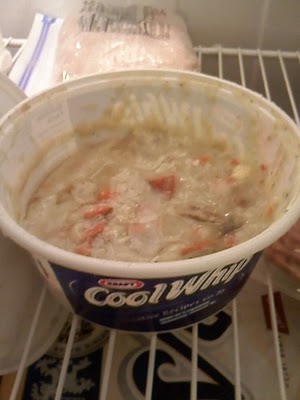
    omg, can you believe this came up when I image-searched ‘Barf in a Fridge’? I really do think this may be barf. Barf!

    Barf!  (Ha, not barf in her refrigerator. That would be quite a hilarious character, though.)  I mean ‘barf’ as in, is that really going to help me get to the heart of this person—knowing whether she drinks non-fat or 1%, whether her mouffetard is at fumes-level, as mine is, or whether she’s topped off with the Grey Poupon?

    Here was another helpful character question: “What kind of distinguishing facial features does your character have?”

    She has a tongue sticking out at you, because you are being annoying again! (Not you, Reader; you the website writer.)  This strikes me as the kind of question a non-writer English teacher would ask her students to answer about their characters,  then wind up with an inbox full of short stories about wandering eyes, drooping lips, and moles.

    I shouldn’t be such a categorical Negative Nelly here.  As they say on Diff’rent Strokes, what might be right for you may not be right for some.  If these questions work for you, I’m happy for you, because you’ve got the process all laid out by this website: http://www.writingclasses.com/InformationPages/index.php/PageID/106

    Knowing I had to embark on some kind of question-answering, I skimmed another and found this: “What does your character first notice when s/he walks into a room?”

    For some reason, this didn’t seem as irrelevant as the others.  It might well to some of you.  I answered that for one of my characters, and Lo, I realized a new dimension to his illegal activity.  For another character, it crystallized one of her fears.  Maybe that’s what all questions do after you answer, “What is her hope? What is her fear?”: they concretize the main driving forces.

    For me, questions like, “What does your character have in her refrigerator?” just get to personality quirks that I’m good at making up as the story goes along when I know the important things about my character.  If I create too many quirks beforehand, I’m likely to try too hard to fit them in, leading to meandering sections of dialogue that exist for the purpose of establishing that one character puts ice cream back in the fridge with only scrapings left.  Possibly important, but not something I can know will be important this far ahead.

    In addition, not all quirks reveal anything dynamic. For years, my desired superhero power has been to snap my fingers and move from on the couch, TV recently turned off, to upstairs, in bed, contacts out, teeth brushed, pjs on, ready to snoozle. I happen to think this is a fun superhero power (it’s so mundane, but I’d use it all the time!), but it doesn’t really say that much about me, except that I don’t get much out of the face-washing ritual. If a character really loves the washing and flossing, okay, that might be a useful way to see her, and maybe I would stumble on that fact through a fridge-like questionnaire, but also maybe no.

    There have got to be more usefully generative questions out there, right?   Which ones work for you all?  I’d love to poach.  With luck, I will find poached eggs in my refrigerator by the end of the day, and not barf.

    This came up in GoogleImage under “delicious poached eggs.” I love GoogleImage.

    •  
    • Add Comment » 4 Comments
     

    I’m still here!

    Posted in Writerliness on 04/09/2012 09:14 pm by jess

    …and that is pretty much all I have to say.  I’m actually logged into my blog right now, to edit the spam that I didn’t want (see last post), so I thought I’d say halloa.  I’m busy teaching, writing, and parenting the chewy little noodle that is my daughter, and I’m looking forward to having a book that is done-ish so I can breathe a little and reconnect with readers.  In the meantime, know that I am still thinking lots of thoughts about books, kids, writing, and revision, and one day, I will share some of them!

    •  
    • Add Comment » 3 Comments
     

    Writing Lesson: Outlining from Everyone’s Point of View

    Posted in Writerliness on 02/09/2011 12:39 pm by jess

    As the playwright Wendy Wasserstein once wrote, “It’s disturbing having sympathy with everyone’s point of view.”  She was talking from the point of view of one of her characters, but I imagine that it’s the playwright’s predicament, too.  Whereas  novelists are very much in the head of their protagonists,  playwrights are more likely to be in touch with all of their characters (a good thing), not just get stuck making sure the main character’s experience is believable and interesting.  I think of this quotation, from Wasserstein’s play Uncommon Women and Others, a lot when I’m writing–but perhaps not as much as I should.

    To wit: I was going back through an outline of a work-in-progress, Not that Girl, and saw this comment from my advisor, the great Tim Wynne-Jones.  Next to one of the near-final chapters, I had written something like, “…and [protagonist] Jackie has forgotten about Becky by now,” and Tim commented in the margin, “Jess has, too.”  And I thought, ye gods, he was so right about that: what was Becky doing in the story at this point?  I kept making her mysteriously absent, so either I needed to cut her or figure out what she brought to the story.

    I chose the former and decided that I’d outline the novel from her point of view, identifying what she was thinking and doing at each juncture.  Lo and behold, it opened up so many things.  Maybe Becky, in watching Jackie drift further from her best friend Mel, would seize the opening and try to become Mel’s best friend, and Jackie would have to deal with those consequences.

    And speaking of Mel, maybe I should outline the story from her POV, too–and once I did, I realized that the story was less interesting when she commented cattily on Jackie’s choices and would be more interesting if she were a sort of wide-eyed, I’m-not-going-to-say-anything pleaser-type of critic.  That way, when Jackie does things like consider asking a guy out (horrors), it would be Jackie’s own internal gender police that makes her hesitate, and that would make for a more interesting journey.  And when outlining the story from Zoe’s point of view, I made Zoe much more interesting, too–less flaunting her older-boyfriended status in everyone’s face and more trying to get her due from friends who ignore her because they feel like she’s transgressed.

    So thank you, Wendy Wasserstein and Tim Wynne-Jones.  Your encouragement, implicit or explicit, to identify what the characters think and want at all junctures has made for a much better story on these shores.  Now I just have to go ahead and write the dang thing!

    If anyone of you read this and try it out, or have already tried it, will you weigh in?  I’d love to hear about your experience.

    "Uncommon Women and Others," one of my favorite plays from high school

    • Tags: Not That Girl 
    • Add Comment » 2 Comments
     

    Why is This Night Different from All Other Nights?

    Posted in The Book of the Dead, Writerliness on 01/24/2011 10:09 am by jess

    As any good Jewish person or FOJP (friend of Jewish Person) will tell you, the title above is the first of the four questions asked at Passover.  It was four questions that recently–and thankfully–changed the way I’ve been approaching my work in progress.

    I’ve been working on this thing for a long time–almost two years.  Throughout, people have had problems with the narration.  I don’t want to go into it too explicitly, but basically, I was keeping the narrator’s identity a secret with a big reveal about it at the end.  Those who have read chapters have expressed confusion or even frustration about this, but I had always thought, “I can muscle through this.  I can see their objections, and I can work past them.”  This all changed last week when a friend read through the entire draft–one of about two people in the world to have done this, I think–and approached the problem in the manner of Passover: asking questions.

    They were pretty simple questions, but they got to the heart of the matter: how would I sum up this story in one sentence?  Why was I keeping the narrator’s identity a secret?  What would I lose by changing that up?  In answering these questions, I realized that the whole secret narrator thing was, heartbreakingly, more of a device I was hanging on to than something that really served the story.  In fact, what I thought might be most important in the story had nothing to do with a mystery and was not at all about hidden identity.

    I stress again that none of this should have been a huge revelation.  Just like Chazz Palminteri at the end of The Usual Suspects, I started hearing voices and seeing images of people saying the same–voices whose words I could remember with shocking clarity for conversations that happened quite a while ago.  Grad School Advisor Margaret: “I’m not saying it’s not working.  I’m saying it’s not working yet.”  Agent Elizabeth: “I’m not saying to give up on it.  But I am sounding an early warning.”  Critique group member Jen, over her frothy chai (okay, I’m making that part up; I don’t remember her beverage of choice): “I’m still not buying it.”  So–to throw in another question–why was my recent reader able to break through when these great responders–and they really are some of my favorites–couldn’t?

    (By the way, I don’t mean to be cagey about the identity of the recent reader.  She’s one of the most amazing writers I’m privileged to know, and I’ve been in agony awaiting her first book, which comes out in the fall.  I just think she’d be a bit abashed at my naming her publicly, so I’ll call her Dane, a joke that I think she’ll enjoy.)

    So anyway, why the great breakthrough with Dane?  Part of it, I think, is time; I sent her the second draft, so I’ve had time to live with this story for a while and murder many darlings already.  But more than that, I think there’s a power to asking questions rather than making statements.  Goodness knows I can be a statement-y person–so eager to convince the writer that my idea is the right one, I might just rush in and declare my insight.  However, this might not always be the right choice.  Dane didn’t assume she knew what was best for my novel, and I shouldn’t do that for other peoples’.

    I hope to learn by example to open peoples’ work up to them.  In the meantime, I remain grateful for the four questions and also look forward to my mom’s customary Passover dessert come April.  But that, dear readers, is another story for another time.

    •  
    • Add Comment » 2 Comments
     
    Older Entries